
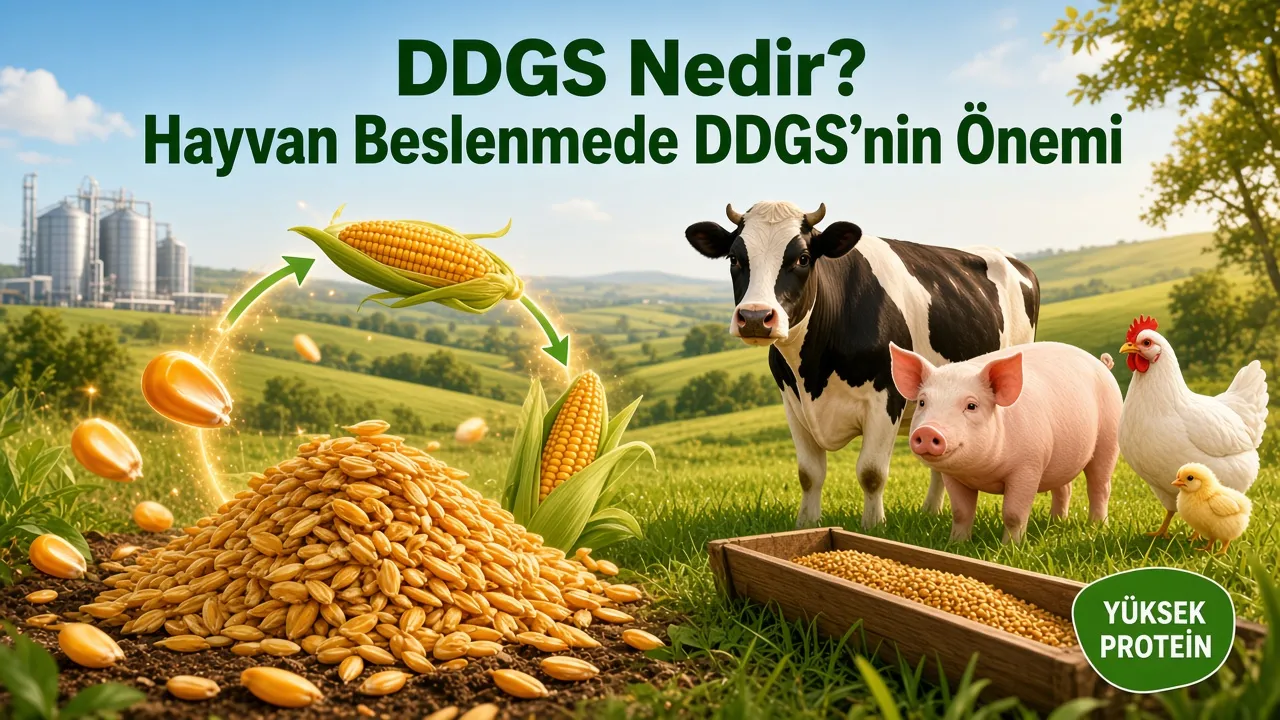
What is DDGS? The Importance of DDGS in Animal Nutrition
What is DDGS? The Importance of DDGS in Animal Nutrition
DDGS is a high-nutritional-value feed raw material that emerges after the corn ethanol production process. Standing for "Dried Distillers Grains with Solubles," DDGS is widely used in the feed industry, particularly due to its structure rich in protein, energy, and digestible fiber.
With rising feed costs in the livestock industry, the need for alternative feed raw materials with high nutritional value has gained greater importance. At this point, DDGS ranks among the strategic feed raw materials preferred especially in beef cattle, dairy cattle, and poultry nutrition.
What is DDGS?
DDGS is a by-product that emerges after corn undergoes the fermentation process during ethanol production. Because most of the starch is utilized during the production process, the remaining product possesses a concentrated nutritional value in terms of protein, fiber, fat, and minerals.
DDGS used in the feed industry provides significant advantages in animal nutrition thanks to its:
-
High energy value
-
Protein content
-
Digestible fiber structure
-
Low starch content
DDGS is utilized in feed rations as a source of both protein and energy.
Nutritional Values of DDGS
Due to its protein and energy content, DDGS is among the essential raw materials in the feed sector. While the nutritional values of the product can vary depending on the production method used, it generally possesses high nutritional characteristics.
DDGS typically contains:
-
Crude protein
-
Crude fat
-
Crude fiber
-
Phosphorus
-
B-group vitamins
It is widely preferred in feeding programs, especially because it provides energy support to dairy cows and beef cattle.
The Importance of DDGS in Animal Nutrition
DDGS is a valuable feed ingredient that can be used across various animal groups. It plays a significant role in providing protein and energy support, particularly in ruminants.
DDGS in Cattle Nutrition
In dairy and feedlot operations, DDGS is utilized as an energy and protein source. When included in balanced feeding programs, it can help support feed efficiency.
Use in Dairy Cows
DDGS is widely preferred in the feed rations of dairy cows. Primarily due to its protein and energy content, it can contribute to supporting milk production performance.
Use in Poultry Feeds
In poultry diets, DDGS is utilized as a source of energy and protein. When incorporated at appropriate ratios, it can help optimize feed costs.
Advantages of DDGS in the Feed Industry
The primary advantages provided by the use of DDGS include:
-
Offering high energy value
-
Serving as a reliable protein source
-
Containing digestible fiber
-
Helping balance feed costs
-
Having a low starch content
As the demand for alternative protein sources increases in the feed sector, the scope of DDGS applications continues to expand.
The Importance of Quality in DDGS Sourcing
Quality standards in feed raw materials directly influence production performance. Moisture levels, storage conditions, and product standardization are of paramount importance in DDGS products.
Key criteria for high-quality DDGS sourcing include:
-
Selecting reliable suppliers
-
Professional storage infrastructure
-
Regular quality control procedures
-
Robust logistics management
More reliable operational processes in feed raw material trade can be established, especially through the Polatlı grain market, Turkish Grain Board (TMO) processes, and licensed warehousing systems.
A Strategic Feed Raw Material in the Animal Feed Industry
Access to quality feed raw materials is vital for sustainable production in the livestock sector. Thanks to its high energy value, protein content, and widespread application, DDGS is regarded as one of the strategic products in the feed industry.
Supported by proper storage, a dependable supply chain, and quality product management, the utilization of DDGS contributes to more efficient and sustainable production processes across the feed sector.