
What is Maize? The Uses and Importance of Maize in the Feed Industry
What Is Corn? Uses and Importance of Corn in the Feed Industry
Corn is one of the most important grain crops in agricultural production worldwide and has a wide range of uses in the food, livestock, and feed industries. Thanks to its high energy content, ease of processing, and suitability for different feed formulations, it is preferred as an important raw material in animal nutrition. Used particularly in the production of feed for cattle, sheep and goats, and poultry, corn is one of the feed industry's primary energy sources.
From the perspective of feed mills, corn plays an important role in managing production costs, balancing feed rations, and meeting animals' energy requirements. In addition, the quality of corn, its moisture content, storage conditions, and supply process can directly affect the efficiency achieved in feed production.
What Is Corn?
Corn is an annual agricultural plant belonging to the cereal family, like wheat and barley, and is scientifically known as Zea mays. Its kernels contain a high proportion of starch, making it an important energy source. Corn can be grown under different climatic and soil conditions around the world and is widely used not only in agricultural production but also in industrial activities. Corn has a broad range of uses. In human nutrition, it is used to produce flour, starch, and various food products, while in the livestock sector it is utilized as grain corn, silage corn, and corn-processing by-products. One of the most common uses of corn in the feed industry is as grain corn. After the harvested kernels undergo the necessary quality checks, they are ground at feed mills or incorporated into feed formulations using suitable processing methods.
Nutritional Values of Corn and Its Role in Animal Nutrition
One of the main reasons corn is preferred in the feed industry is its high energy content. The starch it contains contributes to meeting animals' energy requirements. For this reason, it is used as an important component, particularly in high-energy feed rations. The nutritional values of corn may vary depending on the region where it is grown, its variety, harvest period, drying method, and storage conditions.
The general nutritional characteristics of corn can be listed as follows:
- Starch: It is the primary source of energy in corn.
- Crude protein: It contains plant-based protein; however, it is not a nutritionally sufficient feed raw material on its own in terms of protein.
- Crude fat: It may contain a considerable amount of fat compared with some other grains.
- Crude fiber: Its fiber content is important when assessing the overall composition of a feed formulation.
- Minerals and vitamins: It contains various micronutrients that contribute to animal nutrition.
Since corn has a limited protein content, it is commonly used together with soybean meal, sunflower meal, and other protein sources in balanced feed rations. This aims to meet animals' energy and protein requirements together.
Uses of Corn in the Feed Industry
Corn is a versatile raw material that can be used in feed formulations prepared according to the nutritional needs of different animal species. The inclusion rate and processing method are determined according to the animal's species, age, production purpose, and the nutritional values of the ration.
1. Use of Corn in Cattle Feed
In cattle nutrition, corn is used as an energy source, particularly in beef cattle and dairy cow rations. Meeting the energy requirements of beef cattle is important for supporting live-weight gain and establishing balanced feeding programs.
In dairy cattle feed, corn can be used in rations designed to meet the animals' energy requirements. Appropriate grinding of grain corn is particularly important in terms of digestibility and feed utilization.
The balance between roughage and concentrate feed must always be taken into account when determining the amount of corn used in cattle rations.
2. Use of Corn in Sheep and Goat Feed
Corn is also one of the cereal-based raw materials that help meet energy requirements in sheep and goat farming. It can be used in concentrate feed mixtures prepared especially for growth, fattening, and different production stages.
However, the inclusion rate and kernel size of corn must be determined appropriately, taking into account the digestive system characteristics of small ruminants. Excessive grain consumption can cause digestive problems, particularly when sufficient roughage is not provided.
3. Use of Corn in Poultry Feed
In the poultry feed industry, corn is considered one of the most important energy sources. It is widely used in broiler and layer feed.
The high starch content of corn contributes to meeting poultry's energy requirements. In addition, its compatibility with other raw materials used in feed formulations provides significant advantages in production processes.
Alongside corn, protein sources, fats, vitamins, and minerals are also used in specific proportions in poultry feed to create a balanced nutritional profile.
Importance of Corn for Feed Mills
For feed mills, raw material selection is one of the key factors affecting production costs and the quality of the final product. Corn holds an important position in this process due to its large production volume and widespread use in the feed industry.
The main advantages corn offers feed mills are as follows:
- High energy value: It helps meet energy requirements in feed formulations.
- Wide range of uses: It can be used in feed prepared for different animal species.
- Processability: It can be incorporated into production processes through grinding and other suitable processing methods.
- Raw material diversity: It can be used together with different agricultural raw materials.
- Supply planning: A regular supply of raw materials is important for maintaining production continuity at feed mills.
Particularly at feed mills with high production volumes, planned corn procurement provides advantages in terms of inventory management and cost control.
What Should Be Considered in Quality Control When Purchasing Corn?
Assessing corn intended for use in the feed industry based solely on its price is not sufficient. The product's physical and chemical properties must also be taken into account during the purchasing process.
The key quality criteria to consider when purchasing corn are as follows:
- Moisture content: The moisture content of corn is important for storage safety and shelf life. High moisture levels may increase the risk of mold growth and quality loss under unsuitable conditions.
- Percentage of broken and damaged kernels: The proportion of broken, cracked, and damaged kernels in the product should be examined. Such physical defects are taken into account in the overall quality assessment of the product.
- Foreign matter content: Dust, stones, plant residues, and other foreign materials in the corn should be checked.
- Mold and mycotoxin risk: Mycotoxins, particularly aflatoxins, can pose significant risks to the safety of feed raw materials. Therefore, laboratory analyses should be carried out when necessary.
- Color and odor: Color changes that differ from the product's natural appearance or signs such as a moldy smell may indicate quality problems.
Storage and Preservation Conditions for Corn
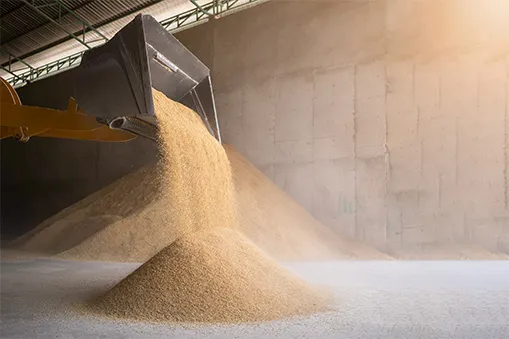
Storage conditions play an important role in preserving corn quality. After harvest, the product should be brought to an appropriate moisture level and stored in clean, dry areas where ventilation conditions can be controlled.
The main points to consider during storage are as follows:
- The product's moisture content should be checked regularly.
- Storage areas should be kept clean and dry.
- Suitable ventilation conditions should be maintained.
- Necessary precautions should be taken against harmful organisms and pest infestations.
- Periodic quality checks should be carried out on products stored for long periods.
Proper storage practices help preserve the nutritional value and physical quality of corn. This is important for both suppliers and feed manufacturers.
Importance of Choosing a Reliable Supplier for Corn Procurement
The ability of feed mills to obtain the raw materials they need for production on time and in accordance with appropriate quality standards is one of the key factors determining the success of the supply chain.
For agricultural products with high-volume consumption, such as corn, the supplier's product quality, logistics organization, inventory management, and commercial reliability should be evaluated together.
Working with companies that can ensure a regular supply, are transparent about product specifications, and place importance on quality control processes can make businesses' purchasing operations more efficient.
Through its commercial activities in agricultural commodities and feed raw materials, Sin Tarım aims to contribute to supply processes in the sector. It offers solutions for the feed industry's raw material needs through its approach focused on product quality, reliable trade, and sustainable business relationships.