
What is the role of ports and logistics networks in the grain trade?
Grain trading is not only one of the most important economic activities in the agricultural sector but also plays a strategic role in countries' food security, industrial production, and international trade balances. Transporting wheat, barley, corn, oats, and other grain products from production centers to consumption points involves much more than simply sourcing the products. Numerous elements, including ports, road and rail transportation, storage facilities, and supply chain management, work together throughout this process.
Ports and logistics networks are particularly essential in international grain trading, ensuring that products are transported safely, quickly, and cost-effectively. Growing global demand for grains, changing production conditions, and increasing international trade activity are making logistics infrastructure more important every day.
The Importance of Ports in Grain Trading
Ports are among the most important connection points in international grain trading. Maritime transportation from countries with high grain production to importing countries enables large quantities of products to be transferred economically.
Sea freight offers a significant advantage, particularly in the international transportation of high-volume agricultural products such as wheat, corn, and barley. The ability to transport large quantities of grain in a single voyage helps keep transportation costs per unit under control.
The main functions of ports in grain trading include:
-
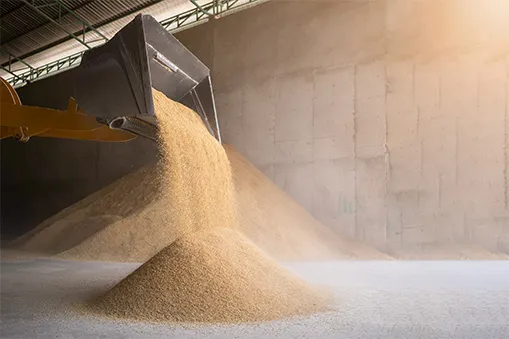
Product reception and unloading: Grain products transported by ships are unloaded at ports using appropriate equipment.
- Temporary storage: Grains are kept in suitable storage facilities until shipping and distribution processes are completed.
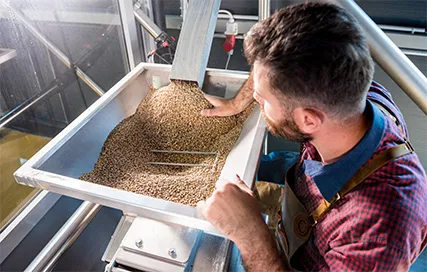
- Quality control: The moisture content, foreign matter levels, and other quality criteria of products are inspected.
- Distribution organization: Products arriving at ports are transported to different regions via road or rail connections.
- Management of commercial operations: Processes such as customs clearance, documentation, and cargo organization are carried out.
Advanced port infrastructure contributes to the more organized and efficient execution of these operations. Ports with high grain-handling capacities, advanced storage facilities, and strong road connections offer significant advantages in international grain trading.
How Do Logistics Networks Affect the Grain Supply Chain?
Logistics in grain trading is a much broader process than simply transporting a product from one location to another. All stages, including product sourcing, loading, transportation, storage, and delivery to the end buyer, are carried out through the coordination of logistics networks.
These networks connect producers, exporters, importers, port operators, storage facilities, transportation companies, and end consumers.
Effective management of logistics networks is essential for ensuring the uninterrupted operation of the supply chain in international grain trading. Timely product deliveries directly affect production planning, particularly in industries with regular raw material requirements, such as feed mills, flour manufacturers, and agricultural industrial facilities.
The advantages of a well-planned logistics network include:
- Better management of product delivery times
- Optimization of transportation and operational costs
- Reduction of potential disruptions in supply processes
- Simplification of storage and shipment planning
- Preservation of product quality throughout transportation
- More effective access to different markets
Therefore, a successful supply process in grain trading depends not only on purchasing the right product at the right price but also on properly planning how and through which routes the product will be transported.
The Role of Sea, Road, and Rail Transportation in Grain Trading
Different transportation methods form a complementary structure in grain logistics. Each mode of transportation has its own advantages and areas of application.
Sea Freight Transportation
Sea freight is one of the most important transportation methods in international grain trading. This method enables large quantities of grain products to be transported over long distances and is particularly preferred for import and export operations.
Bulk carriers allow products such as wheat, corn, and barley to be transported in large volumes. This creates cost advantages in international supply processes.
Road Transportation
Road transportation plays an important role in delivering products from ports to warehouses, from warehouses to production facilities, and to different trading points.
Flexible route options and the ability to reach different delivery points make road transportation indispensable for grain distribution. It offers an effective solution, particularly for regional distribution and short-distance shipments.
Rail Transportation
Rail transportation can provide regular and cost-effective transportation of large quantities of grain products along designated routes.
Strong railway connections between ports and storage and production centers in inland regions increase the efficiency of logistics processes. Rail transportation also helps reduce the burden on road networks when handling large-volume shipments.
The coordinated use of these three transportation methods is known as multimodal transportation. In grain trading, multimodal transportation supports more flexible and efficient supply chain management.
The Importance of Port Infrastructure and Storage Capacity
Grain products require specific conditions to be maintained during transportation and storage. Moisture, temperature, ventilation, and hygiene conditions are among the factors that directly affect grain quality.
For this reason, in grain trading, ports' storage infrastructure is just as important as their capacity to load and unload ships.
Grain silos, conveyor systems, elevators, and loading and unloading equipment available at modern ports help ensure that products are handled in a more controlled manner.
Adequate storage capacity ensures that products unloaded from ships are stored in accordance with shipment schedules. It also provides operational convenience when distributing products to different buyers or production facilities.
The main factors to consider when storing grain products include:
- Maintaining the product's moisture content at appropriate levels
- Keeping storage areas clean and hygienic
- Taking necessary precautions against pests and harmful organisms
- Ensuring appropriate ventilation conditions
- Storing products separately and properly
- Conducting quality inspections throughout the storage period
Maintaining these conditions helps reduce product losses and preserve their commercial value.
How Do Logistics Costs Affect Grain Prices?
In grain trading, the purchase price of a product represents only one part of the total cost. In international trade, freight charges, port fees, insurance, customs procedures, storage, and inland transportation expenses also directly affect the final cost of the product.
For example, when evaluating the price of wheat imported from another country, only the market value of the product is not taken into consideration. The port from which the product is loaded, transportation distance, vessel freight rates, and operational costs at the destination port are also included in the calculation.
The main factors affecting logistics costs include:
- International sea freight rates
- Port loading and unloading fees
- Road and rail transportation costs
- Fluctuations in fuel prices
- Storage and handling expenses
- Customs clearance and insurance costs
- Operational disruptions along transportation routes
Evaluating these factors together facilitates sound sourcing decisions. Particularly in international grain trading, considering alternative ports and transportation routes can provide a significant advantage in terms of cost management.
Supply Security in International Grain Trading
Ports and logistics networks affect not only commercial costs but also countries' access to agricultural raw materials and their supply security.
Climate conditions, drought, changes in production volumes, and developments in global trade can directly affect grain supply. During such periods, access to alternative supply sources and the ability to use different logistics routes become even more important.
Dependence on a single supply point can make a country or business vulnerable to potential disruptions. Developing commercial relationships with different producing countries, evaluating alternative ports, and establishing strong logistics connections increase supply chain resilience.
Regular raw material procurement is particularly critical for businesses operating in the feed and food industries to maintain production continuity.
The Strategic Position of Ports in Türkiye's Grain Trade
Thanks to its geographical location, Türkiye serves as an important trade link between Europe, Asia, the Black Sea, and the Mediterranean basins. This position increases the strategic value of ports and logistics infrastructure in international grain trading.
Ports located along the Black Sea, Marmara, Aegean, and Mediterranean coasts enable trade with different supply regions. The Black Sea basin is particularly significant for Türkiye, as it is home to major grain-producing and exporting countries in global grain trade.
The connections between ports in Türkiye and industrial and agricultural centers in inland regions also provide an important advantage in grain distribution. Transferring products arriving at ports to different regions through road and rail networks helps import operations reach a broader market.
The Importance of Effective Logistics Management for Sin Tarım
Sustainable success in international grain trading depends not only on sourcing the right product from the right source but also on effectively managing supply and logistics processes.
Sin Tarım adopts an approach that emphasizes the importance of product sourcing, commercial planning, and logistics organization in its activities involving agricultural commodities and feed raw materials. In the trading of wheat, barley, corn, and various feed raw materials, supply continuity and the coordination of delivery processes are just as important as product quality.
Proper evaluation of international trade networks, monitoring different supply sources, and systematically managing logistics processes support businesses in accessing the agricultural raw materials they need.
For Sin Tarım, grain trading is a comprehensive activity that goes beyond simply buying and selling products and requires supply, quality, logistics, and commercial processes to be considered as a whole.